


Washington, D.C. is Open for Business
Harold Pettigrew Jr.
Managing Principal,
Business Global Solutions (BGS)
Washington DC
An interview with Harold Pettigrew, former director of the Washington, D.C.
Department of Small and Local Business Development
MOSAICQUE magazine privileged to feature an interview of the powerful mover & shaker, a go-getter, a result producer, dynamic Young Leader Harold Pettigrew, in its January 2014 edition. Harold Pettigrew is the Managing Principal for Business Global Solutions (BGS), a Washington, D.C. based, global strategic consultancy, offering governments, private sector and multi-national organizations with strategic intelligence and actionable guidance on a broad spectrum of focus areas specific to economic development, corporate strategy, public sector management, business & SME development, operations management, and business regulatory reform to improve investment climates worldwide. Harold Pettigrew reflects in this interview on his time in government and initiatives he led to make Washington, D.C. a more business friendly environment and talks in-depth about his new business the Business Global Solutions. For more information about BGS, please www.businessglobalsolutions.com or on twitter at @BizGlobalSol.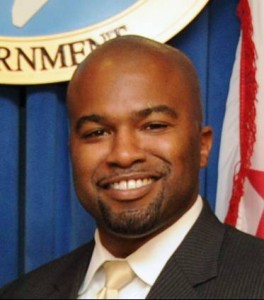
Harold, thank you for taking the time out to do this interview. MOSAICQUE and Future Young Leaders initiative congratulates you on your recent 40 under 40 award. Tell us more about the award. The timing seems to be perfect with you leaving the public sector and returning to the private sector.
Thank you. I was recognized by Development Counselors International during the 2013 International Economic Development Council Leadership Summit as one of the “40 under 40” rising stars in the economic development industry in January 2013. It truly was an honor to be apart of such a great group of professionals from throughout the world. Public service can be thankless, and I was pleased to pause for a moment to celebrate the successes I’ve achieved here in DC.
You left government and established Business Global Solutions. Tell us about the BGS firm, and the services you provide.
Business Global Solutions (BGS) provides strategic advisory services to government and private sector organizations, specializing in economic development, corporate strategy, public sector management, business & SME development, and business regulatory reform to improve investment climates for World Bank client governments, with specific focus on Sub-Saharan African countries. We’ve worked closely with the World Bank to advise governments such as Gabon and Mauritius on strategies and opportunities to improve their investment climate, in addition to other economic development projects here in the states.
Now that you have completed your time as director for Washington, D.C.’s small business development agency, give us a broad sweep of your experience, the challenges you faced, and some of the accomplishments you achieved during your tenure.
Throughout my career, I have found personal satisfaction serving in public service positions that allow me to build and innovate. Early on, I was instilled with a sense of urgency, and my career in public service has followed a path, taking on one challenge after the next.
In August 2011, the Mayor of the District of Columbia appointed me to serve on his cabinet as the Director for the D.C. Department of Small and Local Business Development (DSLBD). Unlike most other District Government agencies, DSLBD had experienced significant turnover and change to its executive leadership due to a number of factors. My appointment set the stage for my return to the agency, where I previously served as its Chief of Staff. My service would also mark the fourth appointment of a Director during fiscal year 2011, and the sixth in five (5) years.
DSLBD’s mission at the time was to foster the economic growth, development, and retention of Washington, D.C.-based small businesses. Its mission was simple, and if the agency had effectively accomplished its objectives, it would have a notable impact on the District’s tax base and stimulate the local economy. The agency had fallen short, however, of its goals.
In a two year span, DSLBD had lost nearly 55% of its staff. I had returned to a failing agency that had 14 people, and had lost over $500,000 in federal grants. As its Chief of Staff from 2007 through 2009, I had grown the agency to 31 employees, more than doubling the Department’s size from 13 FTEs, and rolling out new programs and services designed to assist small businesses.
My return to DSLBD was timely, as the business community was in need of experienced business leadership and stability at the Department to ensure the continuity and effective management of the agency’s programs. Time away from the agency had allowed me to conduct an external review of its positioning in the city, namely the development of a new vision for its pathway forward.
As its new Director, my first task was to assess imminent threats to the agency. Second, was to develop a new corporate strategy that communicated a vision for the agency that aligned with the needs of the small business community. Nearly all of the remaining team of 14 at the agency was all of my past employees. I met with each of them to gather their insights into the challenges faced by the agency and to understand its immediate risks. Since my departure as Chief of Staff, a replacement with budget execution, human resources, and government operations experience had not been hired. Because my appointment was in August, it gave me only one month to maximize the use of resources in the fiscal year. Therefore, I quickly analyzed the agency’s budget, which determined my ability to hire, develop programs, and stabilize its operations.
Within my first week, I had completed my assessment of the agency’s budget, and interviews with the staff. During my first full staff meeting, I articulated a new vision for the agency, which incorporated the insights of each staff member. DSLBD had a new vision; to connect small businesses in real-time with local, federal, and global business opportunities; to assist businesses with navigating government quickly, confidently, and effectively; and, that every small business with a great idea and a great plan would have access to the capital needed for its execution. The agency’s mission would remain the same, but its direction had deepened, and the staff was aware of the direction that I wanted to move the agency. My new vision for the agency also provided the guidance for the development of a strategic hiring plan. Each new hire would align with my vision, and each new program would add depth to the vision.
Under my leadership, DSLBD had monthly mayoral announcements of new small business initiatives and accomplishments throughout calendar year 2012. In addition to new programs and services, I had developed and capitalized nearly $5 million in new small business access to capital programs. I had aggressively targeted federal grant programs as part of my strategy for growing the agency, and successfully competed for the SBA’s Federal and State Technology (FAST) and State Trade and Export Promotion (STEP) programs, in addition to the U.S. Department of Defense’s Procurement Technical Assistance Program (PTAP), which the agency had lost during the two year period of my absence.
Due to the successful campaign for federal resources, I launched the city’s first small business export promotion service, ExportDC, where I led three successful trade missions to identify and develop market opportunities in Asia and Africa, with specific focus on the Singapore, South Africa and China markets. The trade missions resulted in over 120 business-to-business meetings and partnership develop opportunities with foreign chambers, trade associations and government officials to generate opportunities for district-based small businesses.
Further, I launched the city’s first small business technology transfer program, ConnecTech, which assists small District-based technology firms with commercializing innovations, and pursuing business opportunities in technology, specifically Small Business Innovation Research (SBIR) in the federal government. In addition, I was able to re-launch the District’s small business Procurement Technical Assistance Center as a result of the PTAP grant. In total, I had positioned the agency to win over $1 million in new federal funds.
Within 18 months, I was able to lead the agency through its most aggressive and dynamic expansion of small business services since its inception, which has strengthened the District’s entrepreneurial ecosystem. The agency, which had only 14 people when I had arrived, was now achieving success as a 45 person, full-service economic development organization with programs and services that had increased the competitiveness of DC small businesses across multiple industries. DSLBD was able to connect small businesses to new opportunities in the local, regional, federal, and global marketplace.
What are the biggest challenges to small businesses in D.C. today?
My focus was in three areas. First, my goal was to connect small businesses to opportunities locally, federally, and internationally. The second being navigation: How quickly and effectively a small business can navigate government, so they can get through to running their business. I want small business owners to focus on running their business, not being a pro or a specialist in how to interact with the government or to be an expert on the city’s laws. The third being capital. For a small business with a great idea, that we could ensure the small business is connected with the capital they need to grow.
You touched on a number of topics here. Tell me more about the partnership with the Kauffman foundation?
During the spring of 2012, I had initiated conversations with the Kauffman Foundation and its industry-leading FastTrac program to develop an innovative partnership to support small business development in the District of Columbia. As Director, my goal was to develop innovative partnerships and opportunities to support small business development.
The Kauffman Foundation is among the largest private foundations in the United States focused on the promotion and innovation in education and entrepreneurship. The Foundation established the FastTrac program, which serves a global audience of entrepreneurs and provides the framework, resources and networks necessary for an entrepreneur to take an idea and turn it into a successful, sustainable business.
I entered into negotiations with Kauffman FastTrac, and finalized details of the partnership to launch FastTrac DC. I established a goal of graduating over 250 District-based entrepreneurs from FastTrac offerings, and entered into agreements with other business-serving organizations to recruit, train and graduate DC entrepreneurs. My goal was for the program to service all parts of the city, so I developed a strategic partnership network with the Anacostia Economic Development Corporation; the DC Chamber of Commerce Foundation; the DC Women’s Business Center; the DC Small Business Development Center network; the Washington, DC Economic Partnership; and the Washington Area Community Investment Fund.
In July 2012, I announced the initiative through a press event, where the initiative was applauded as a signature effort to build a new economy in the District with strong, resilient small businesses. Also, the Kauffman FastTrac president, Alana Muller, declared the initiative as one of Kauffman FastTrac’s first large municipal partnerships, and added to the District of Columbia being “one of the best cities in America for business.”
There are some people out there that challenge the notion that the District is a terrible place to do business. What do you say to people and small businesses that express that sentiment?
Part of it is the perception gap between improvements that have been made, some of the buzz that we do see and conditions that may have been the case many years ago. You see it with transactional parts of government — oftentimes, at forums, we may have people who said, it took me this long to get a license or to get certified, and my first question is, when was the last time you were certified? And very often it’s been years, if not a decade or so, since their last engagement with the agency. The city is processing business transactions faster than ever, and the experience is a lot more streamlined with the introduction of innovative technology usage and policy changes that have been made. It’s a totally different experience from what small businesses may have experienced years ago. There is certain still room for improvement, and significant opportunities to further streamline transactions and eliminate draconian policies that create a burden for businesses in the city. There are many public servants who put a lot of work into improving the city’s business environment, and the progress made should be acknowledged. I am glad to have led those efforts.
Prior to your appointment as Director for the Department of Small and Local Business Development, you served as the Administrator for the city’s Business and Professional Licensing Administration.
In late 2009, I was recruited by the Director of the D.C. Department of Consumer and Regulatory Affairs (DCRA) to lead efforts to reform the city’s business regulatory environment. Washington, D.C. had earned a reputation of being one of worst jurisdictions to do business in the metropolitan region, and I had developed a track record of success in government reform, managing and streamlining operations, and had an in-depth knowledge of the landscape of the Washington, DC business environment. I worked with the Director before, and she had recruited me to serve as the agency’s Deputy Director and Administrator for the city’s Business and Professional Licensing Administration (BPLA). BPLA was at the center of the city’s regulatory framework, and responsible for the issuance of over 70,000 business, professional, special events, and vending licenses; registering and maintaining over 75,000 corporate entities; investigating unfair trade practices and unlicensed business activities; and inspecting over 10,000 weighing and measuring devices used by businesses in the District. The division included over 60 staffers, and generated over $25 million in revenue for the city each year.
BPLA serviced approximately 45,000 customers a year through its walk-in center services, and over 85,000 phone calls a year through its call center operations. In addition, the operation processed over 100,000 transactions in a given year. When I arrived, BPLA had a reputation for receiving constant complaints from customers resulting from burdensome transactions, poor customer service, and the inefficient use of technology. I launched an aggressive strategy to re-engineer the agency’s processes and adopt innovative technology to streamline our operations. I successfully led the team through the development and launch of new online systems which automated the city’s business licensing and corporate registration processes, and handled in upwards of 150,000 transactions a year.
I found that the more we reduced barriers for regulatory transactions, and utilized technology to streamline interactions, more businesses came into compliance. The process and technology reforms also resulted in revenue increases, which boosted to approximately $30 million (an increase in 20% over the previous five years average), cost reductions, and increases in productivity. The launch of the new systems has been widely recognized by the business community as great initiatives to make not only the agency more business friendly, but the District of Columbia.
Some small businesses continue to be challenged with the use of new technology, even social media. What services are available to help small businesses successfully maneuver through D.C.’s complex regulatory environment?
While I was able to successfully reform the city’s regulatory processes, the navigation of the complex regulatory environment continually burdened small businesses. To remedy the issue, I developed and launched the Small Business Regulatory Resource Center (SBRC), which would assist small businesses with navigating the District of Columbia’s regulatory environment through direct technical assistance and training services. I developed the SBRC to serve multiple purposes. First, the SBRC would play a critical role with demystifying the regulatory process, and provide small businesses with the understanding needed to reduce repeat visits and calls to DCRA. Second, it would establish a direct channel for customers to communicate feedback so DCRA could identify greater operational changes and opportunities to improve customer transactions.
The SBRC provides one-on-one technical assistance, pro bono legal services, and workshops designed to assist small businesses with navigating regulatory issues such as corporate registrations, licensure, tax compliance, and other business compliance related topics. Small business owners are able to come to DCRA and get the right guidance so that they can operate their business legally and in compliance with the laws and regulations set forth in the District.
To execute services, I pursued the establishment of a partnership network with non-profit, federal and other District government agencies. By inviting partners to provide one-on-one assistance and workshops at the SBRC, the partnership model would allow for a “win-win” situation. DCRA interacts with all businesses that are based, and do business in, the District of Columbia. The partnership would expand the partner’s ability to access small businesses, who serve as their clients. This is critical for non-profit service providers; specifically with achieving one-on-one counseling and workshop goals as determined by their grantors.
Throughout the country, I found that small business service providers offered very little technical assistance on topics focused on navigating a jurisdictions regulatory environment. I developed a “train the trainer” model of seminars on DCRA operations, which included topics related to business, professional, special events, and vending licensing, registering and maintaining a corporate entity, how to remain compliant and the identification of unfair trade practices and/or unlicensed business activities, federal and state tax compliance, and the inspection process for weighing and measuring devices. I led seminars with partners to ensure that they are up-to-date with policies and processes, and partners would take the lead in providing services at the SBRC. For federal and District government partners, it would provide an avenue for the agencies to achieve outreach goals, and alleviate operational pressures similar to DCRA.
To launch the SBRC, I developed strategic partnerships with key organizations in the District, which included the U.S. Small Business Administration, U.S. Internal Revenue Service, D.C. Building Industry Association, D.C. Women’s Business Center, D.C. Chamber of Commerce, World Bank-International Monetary Fund, Washington Area Community Invest Fund, and the D.C. Small Business Development Center Network.
The location of the SBRC is strategic to the success of the initiative. In March 2010, DCRA relocated to the Southwest section of Washington DC, which is metro accessible, making it easy for customers to travel to and from DCRA for its services. I led the design and build out of the space and located the SBRC on the same floor as the Business Licensing Center (BLC). Its location has allowed customers to receive assistance in the SBRC, and then venture over to the BLC to get licensed. The design of the SBRC’s services would allow customers the opportunity to become “transaction ready” so that when they enter the BLC and/or apply for a license online, they would be better informed and equipped to execute the transaction of acquiring a license or corporate registration.
The early success of the SBRC has been due to the development of partnerships with non-profits and other government agencies, the engagement of technology, and the rethinking of the role that customer service and business assistance can play with a regulatory agency. In April 2011, I formally launched the SBRC was formally launched as a signature small business initiative as part of my vision for making the District of Columbia an easier place to do business.
Looking at your experience, you also had a very unique experience in 2007 with Eastern Market. Walk us through your experience?
During my career I’ve learned that on any given day, public service can bring an unexpected set of challenges. On the morning of April 30, 2007, the Washington, D.C. region had awaken to news and alarming footage of a 3-alarm fire ravaging Eastern Market. That morning, I prepared for work as normal, and while watching the news coverage of the fire, I received a call from my boss, the City Administrator, who is the highest serving non-elected public official for the District Government.
That morning was to mark the beginning of my last week serving in the Office of the City Administrator (OCA) as a program manager for the economic development cluster of District Government agencies. The OCA was a central division of the Executive Office of the Mayor (EOM), and my appointment had been approved the week prior to serve as DSLBD’s Chief of Staff. Because of my experience in small business development, and government operations, the appointment would allow me to fill a leadership void at the agency.
As I arrived to City Hall that morning, I met with the Mayor and the City Administrator. The Mayor planned on holding a press event that morning, and he requested that I manage the city’s response and activities to assist merchants displaced by the fire. At the press conference, the Mayor announced that I was charged with ensuring the successful continuation of the market. The City Administrator informed me that the Mayor had appointed me as the lead because I was uniquely positioned between EOM and DSLBD. I understood the challenges faced by small business, and knew how to navigate the complexities of the District government. I would dually serve as Eastern Market lead and Chief of Staff for a government agency.
Built in 1873, Eastern Market is Washington, D.C.’s oldest continually operated public market, and the last of eight historic public markets remaining in the nation’s capital. Eastern Market is blocks away from the U.S. Capital, and has served as an anchor for the Capital Hill neighborhood for over 100 years.
After the press event, I jumped into action. That afternoon, I developed my strategy, which involved assessing and organizing stakeholders, gauging available government resources, and evaluating the impact of the fire on each merchant’s ability to operate at a reduced level. To work successfully between each function, I developed a plan to split hours between DSLBD, which also had critical needs, and Eastern Market, which was a mayoral priority.
I organized a meeting of members of the community the next day, and it was immediately clear there were numerous factions representing different interests related to the Market. Because I was new to the Markets politics, I quickly assessed each representative’s point of view, and worked behind the scene to bring the community together. Conflict in the community had been cultivated over the years, but I was able to successfully rally the leadership around the cause of saving and supporting the Market. I was able to bring together leaders who weeks earlier had openly argued at public meetings, and spoke disparagingly about each other. I was able to effectively communicate a vision that the community could support, and outlined specific tasks from fundraising, to research on employee displacement opportunities with other local small businesses. It was important for me to immediately diffuse long standing community conflict, and capture the small window of opportunity to rally the community for our common cause. The efforts were successful, and that was all in the first week!
The Mayor was clear that he wanted the market to resume operations by that Saturday, so I had less than five days to assist merchants with continuity of operations plans. Because the District Government had no organized effort to handle emergency response of this kind, I had assembled a cross section of District Government employees to assist with evaluating the 14 merchants displaced by the fire. I developed a protocol for the team to conduct its assessment, and by that Saturday, each of the 14 merchants were able to operate outside the market.
For four months, I served in both capacities, leading two different teams. As a result of the success of the plan I developed to ensure the continuity of operations at Eastern Market, no jobs were lost, and though at a reduced level, each merchant was able to continue operating. Good will continued within the community, and new initiatives to support Eastern Market grew from the original plans I developed to organize the community and diffuse some long-standing tensions.
The Eastern market fire was a significant event for the Capital Hill community. How does that experience translate into the city’s initiation of streetscape projects on popular corridors like H Street NE, and in the Adams Morgan neighborhood? Every time a streetscape construction project starts, I hear yelling and screaming about how the District’s not doing enough to help the impacted businesses.
When I rejoined DSLBD as Director at the end of August 2011, I began immediately engaging in issues related to publicly financed streetscape projects managed by the D.C. Department of Transportation (DDOT). The D.C. City Council established the Streetscape Loan Relief Fund (Streetscape Fund) with a goal to provide interest-free loans to retail businesses inside or adjoining a streetscape construction or rehabilitation project in the District. Though it was established by law, the funding for the Streetscape Fund was woefully inadequate.
DDOT had initiated nearly ten multi-year capital projects, which totaled nearly $50 million, along major commercial corridors throughout the city. Each corridor had significant numbers of small businesses, and the streetscape projects had documented impacts on small businesses. Washington, D.C.’s “H Street NE” had provided an excellent example of a project that could have disastrous effects on small businesses. In total, over $76 million was invested in infrastructure upgrades, but the capital projects lasted over four years, and many small businesses were not able to survive the interruption H Street. Customer inconvenience, parking space reductions, signage impediments, and traffic detours are some of the major factors that translated into losses of business income.
Because the fiscal year ended in a month, I worked feverishly to assess the status of the funding for the program, and the steps needed for its launch. The original capitalization was woefully inadequate to operate the Streetscape Fund. As a result of my expertise in managing government budgets, I found opportunities to increase the capitalization of the fund from $723,000 to over $2.7 million. In addition, I successfully negotiated with a fund manager to administer the loan program, and met with DDOT leadership to understand the timing of projects coming online in the near future.
I recognized early that developing the program would need to involve working with leadership from stakeholder groups from the Main Streets program, Business Improvement Districts, and other small business stakeholder groups. The community leadership had valuable insights which shaped the development of the fund. Also, by working with the community, I wanted to ensure that DSLBD had buy-in from a broad base of leadership within government, small business, and the community.
I directed my staff to develop a communication strategy inclusive of print materials and community meetings where we could promote the fund to corridors most immediately impacted by streetscape projects. The success of the fund was immediate. To date, nearly $2 million in loans has been awarded to nearly 25 small businesses for working capital, renovation and acquisition expenses, tax liabilities, and other allowable options. As a result of its success, nearly 150 jobs were retained and over 32 new jobs were created.
In 2010, President Obama announced the launch of the National Export Initiative to promote U.S. exports. You mentioned earlier that you launched the city’s first small business export promotion program. Was this apart of your strategy for growing the agency?
Ninety-five percent of the world’s consumers are outside of the United States, so exporting represents a frontier of business opportunities that can generate economic growth and stimulate job creation here in the District. To align the District with the efforts of the federal government, I launched the city’s first small business export promotion service, ExportDC, in January 2012.
The District of Columbia is an international city, and ExportDC provides an opportunity to expose our small and local businesses to international markets for their products and services. ExportDC is designed to assist District-based small businesses with increasing exports, grow the dollar value of exports from District businesses, and coordinate trade missions for qualified District-based businesses. Through training, targeted service provision, trade mission support, and business opportunity identification, ExportDC has assisted D.C. firms with building the capacity needed to successfully export their products and services.
From 2000 to 2010, the District’s professional and technical services industry grew nearly 8% annually. In comparison to the states, the District of Columbia had the highest percentage of professional and technical services GDP. Washington, D.C.’s economic output from professional and technical services was $21 billion in 2008, which was 21.6% of Washington, DC’s economy. The local economy is diversifying and growing, with significant strengths in professional, managerial, scientific and technical services. Over the last several decades, the industrial economy based on manufacturing has shifted to a services economy driven by information, knowledge and innovation. Washington, DC, has demonstrated its resilience and relevance as a home to successful professional service providers at the beginning of the 21st century. ExportDC was part of my vision to transform the business environment in the District.
In 2012, I led three successful small business trade missions to identify and develop market opportunities in Asia and Africa, with specific focus on the Singapore, South Africa and China markets, which resulted in over 120 business-to-business meetings, and partnership develop opportunities with foreign chambers, trade associations and government officials to generate opportunities for District-based small businesses. The trade mission also served as an invaluable opportunity for us meet with our government counterparts, trade associations, and other small business support organizations to plant the seeds for valuable long-term relationships, and we thank the SBA for their support of the District in promoting global partnerships. In addition, I executed a partnership agreement with the U.S. Export-Import (Ex-Im) Bank to promote and provide seminars on the bank’s financing programs which assist small businesses with loans, guarantees and insurance.
Profile:
Harold Pettigrew, was the former director of the Washington, D.C. Department of Small and local Business Development. Pettigrew has been featured in the Washington Post, Wall Street Journal, Global Trade magazine, Washington Business Journal, and was recipient of the 2013 “40 Under 40” Award in the Economic Development Industry, presented at the 2013 International Economic Development Council Leadership Summit by Development Councillors International.
Pettigrew has provided expert testimony to District Government officials, served on expert panels, and has been a featured speaker for local and federal government agencies, community groups, non-profits, universities, and trade associations. Pettigrew has also hosted and advised foreign delegations of business owners, government officials and legislators on issues involving trade, small business development, entrepreneurship and supplier development.
To know more about opportunities visit http://www.businessglobalsolutions.com or contact Harold@businessglobalsolutions.com