
The China Dream
by Peggy Liu
The China Dream initiative will re-imagine prosperity and reshape consumerism in China. The goal is to catalyze a new aspirational lifestyle that is innately sustainable for the emergent middle class in China.
The consuming class in China is exploding from 300 million today to 800 million in 2025. For this emerging middle class, the “China Dream” provides an alternative to the unsustainable conspicuous consumption lifestyle of the West.
JUCCCE, an NGO accelerating the greening of China, is the central convener of a growing cross-sector and global coalition of contributors around a three-year plan to reshape social norms through branding of a new lifestyle story and to guide consumer behaviour through policies.
Read the article (.pdf)To Harnessing soil and water resources for increased rice productivity in Africa
by Christopher Oluwakunmi Akinbile
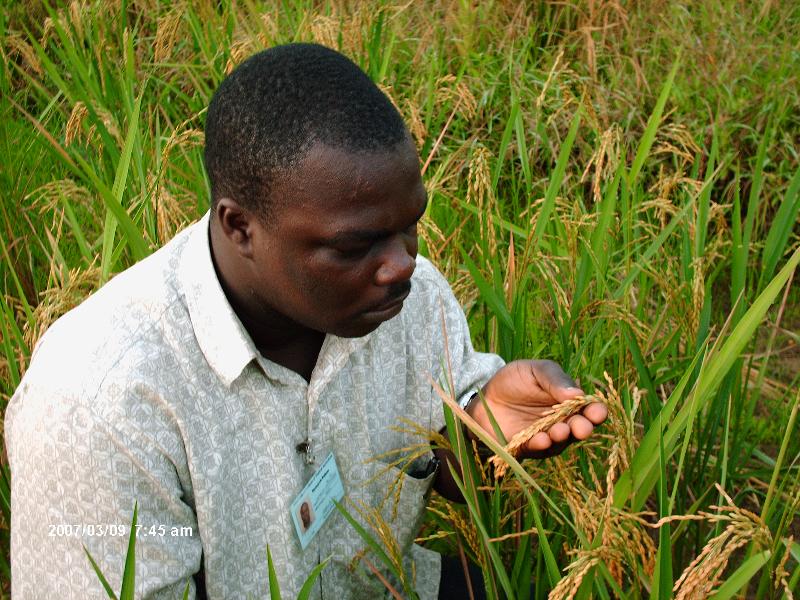
The article talks about harnessing soil and water resources for ensuring increase in food (rice) productivity in order to attain self-sufficiency. The choice of rice is due to its strategic importance to Nigeria and the huge amount of money being used for its importation when adequate land and water resources are available for its production at self-sufficiency levels.
Food Security in Kenya: Rice Research Agenda
by Kimani Munji
The article talks rice being posed to play a key role in Kenya, in providing or meeting food and nutritional needs of her people. However, there are challenges to be overcome; among them, land degradation, growing population, climate change and variability, expanding consumption. All these have contributed to huge rice imports despite the fact that Kenya has the capacity to produce enough for her domestic consumption and even export to the region and overseas markets.
Key players that are working in tandem to ensure food and nutritional security is secured are: the Rice Promotion Unit (RIPU) a brainchild of Japan International Cooperation Agency (JICA), World Bank, East Africa Agricultural Productivity Project (EAAPP) covering Tanzania, Uganda, Ethiopia and Kenya, Alliance for a Green Revolution in Africa (AGRA), International Rice Research Institute (IRRI), Africa Rice Centre (ARC), International Cooperation Center for Agricultural Education (ICCAE), Kenya Seed Company, Vibha Seed (Ke) limited, and other regional Institutions like ASARECA, and National Agricultural Research Systems like Kenya Agricultural Research Institute (KARI).
Read the article (.pdf)Which future we want: An Assessment of the Rio+20
by Oswaldo Lucon
The article talks about the long expectation to the United Nations Conference on Sustainable Development – the so-called Rio+20. Preparatory negotiations had a sense of a real dialogue and willingness to find common ground. Few key deliverables would make a difference: defining sustainable development goals (SDGs) as a central feature of a post-2015 development framework, exploring green economy policy options to advance sustainable development and eradicate poverty, and to make decisions on key elements of the international institutions needed to support such governance. There was a vast array of topics to be addressed under such umbrella: food security and sustainable agriculture, energy, oceans, gender equality and women’s empowerment, and education.
The necessary means of implementing action were on the table, including initiatives to strengthen financing, technology transfer and capacity building. UN Secretary-General Ban Ki-moon urged as a priority for a new model that offers growth and social inclusion, also more respectful of the planet’s finite resources.
Stakeholders were encouraged to make and implement voluntary commitments at Rio+20 in order to get to what the main document stated in its title: The future we want.
Read the article (.pdf)Investing in Water Security for Climate Resilient Growth and Development
by Alex Simalabwi
Water is a key input to economic growth sectors and contributes to employment, job creation and gross domestic product (GDP). Water is at the heart of development objectives across most sectors – for example health, energy, agriculture, environment, mining, industry and social protection. Yet,
most African countries are far from achieving water security and the onset of climate change will further compromise prospects. Ensuring water security through more effective water management contributes to development goals, climate change adaptation and disaster risk reduction.
Recommendations of the report are:
- Governments should protect their development goals and ambitions against derailment by water and climate impacts.
- High-level advisors and decision makers are encouraged to increase the priority of water security and climate resilient growth and development.
They are further encouraged to benefit from, and mandate the use of, the Framework in support of the following objectives:
- To identify and develop no/low regrets investments, and to prioritise these in existing development planning, budgeting and financing processes.
- To influence existing and future development planning activities so they become more resilient to climate change and variability.
- To increase domestic and external investment in water security and climate resilient development.
- To identify innovative financing strategies for investments, exploiting opportunities from funds offering finance for climate adaptation in combination with conventional sources.
Restaurant Noma: an exquisite experience in Nordic Cuisine
by Rene Redzepi and team
Editor’s Choice : A Special Edition featuring Nordic Food Ambassador Rene Redzepi, Noma Restaurant
Chef Rene Redzepi, Denmark’s finest culinary artist; has reinvigorated Nordic culinary experience through his restaurant “Noma” a two Michelin star restaurant. The name is an acronym of the two Danish words “nordisk” (Nordic) and “mad” (food), and the restaurant is known for its reinvention and interpretation of the Nordic Cuisine.
Chef Rene, is currently one of the most influential and referenced persons on the gastronomical scene for his efforts to advance and promote the knowledge of Nordic food world- wide. It’s the entire package, from its ingredient ingenuity to flawless execution that makes Noma; a beacon of excellence and which leads to an emotive, intense, liberating way of eating, unlike any other place.
Read the article (.pdf)BUDRUS Documentary film
by Ronit Avni
Budrus is an award-winning feature documentary film about a Palestinian community organizer, Ayed Morrar, who unites local Fatah and Hamas members along with Israeli supporters in an unarmed movement to save his village of Budrus from destruction by Israel’s Separation Barrier.
Read the press-kit (.pdf)Transforming Tanzania’s Agrarian Sector through Maize Breeding
by Dr. Arnold A Mushongi
Dr. Arnold A Mushongi mentions in his report about how maize is a political crop in Tanzania & Sub Saharan Africa, a crop that was popularized in the Southern Highlands Zone between 1950s and1970s. The diversity of uses of maize decreases with level of economy of the country. The potential of the crop to boost Agrarian Economies is higher particularly in sub Saharan Africa (SSA) as maize is synonymous with food security and it is also a source of income to rural resource-poor farming communities.
The report further mentions that genetic advancement in crops contributes significantly to food security. MacRoberts (2009) reported that improved varieties are a prime catalyst to strategies use of agro-inputs and other sectors of crop development. For instance, tolerance of crops to biotic stresses would minimize use of pesticides (Robinson, 1987), whereas tolerance to biotic stresses may suggest use of less fertilizers under low soil moisture conditions (Bänzinger et al., 2000), all of which reduce costs of production to resource-poor farmers (Echarte et al., 2008) and facilitate sustainable conservation of natural resources (Duvick, 1999).
Mushongi recommends, the viable solution would be to engage private sector in the design for new maize cultivars in order to increase grain yield productivity under unpredictable production conditions.
The availability of fake inputs in the market where farmers loose money for seed, pesticides, fertilizers and labour thus perpetuating poverty to farmers who are already resource poor and produce maize under suboptimal conditions.
Smallholders are likely to be even farther from realizing yield potential, for reasons not confined to weather. One reason is that the genetic advances offered by breeding research have not been matched by agronomic practices and efficient support services for smallholders, many of whom are located in marginal areas. Byerlee and Heisey (1996) asserted that as adoption of improved maize moves into more marginal areas the effects on national yield levels are also numerically marginal. Put simply, there may be little advantage of using a hybrid if the yield potential of the farmer’s soil is less than 1 ton.
Read the article (.pdf)