
Miss Phoenix 2014 Alexa Rogers interview
Meet Miss Phoenix 2014 Alexa Rogers, is a passionate and dynamic young leader who is committed in using her victory to address hunger and poverty issues in United States. She is particularly passionate about addressing challenges facing the homeless children in Arizona & United States. Within this context she works with Future for Kids NGO based in Arizona that address children at risk by taking projects related to atheletics, ethics and education. She wishes to be Miss America.
MOSAICQUE Magazine celebrates Nelson Mandela Day by honoring TEN extraordinary YOUNG AFRICAN WORLD LEADERS….
On Nelson Mandela Day, MOSAICQUE magazine honors the TEN African Young World Leaders for their contribution and commitment in transforming the continent.

Meet the Dynamic Leaders Marie Tamoifo Nkom, Cameroon; Maaza Mengiste, Ethiopia; Kristine Pearson, South Africa; Dr. Arnold Mushongi, Tanzania; Dr. Chris Akinbile, Nigeria; Dr. Kimani Munji, Kenya; Alex Simalabwi, South Africa; Alhaji E. A.Mahama, Ghana; Andrew Muir, South Africa; and Brian Bwesigye, Uganda. Learn More …
The Importance of Identity and Building a Multicultural Society
Brian Bwesigye
Co-Founder and Programs Manager
The Centre for African Cultural Excellence,
Kampala, Uganda
Entering a car for a first time in Nyanja, where I grew up, was a big thing to many of my agemates. They would always say, ‘ekyooma ky’omujungu’ to express their wonder at ‘the amazing technology of the whiteman’. Growing up then, in somewhat privileged circumstances compared to many of my agemates in the rural district on the border between Uganda and Rwanda, I never thought much about cars and what the whole ‘mujungu’ or racially ‘white’ ascription to them meant. The identity of a car was not something I could decipher at that age and with that level of exposure.
As they say, with more traveling and growth, I came to know more. That actually, ‘omujungu’ as an identity is itself divided into several sub-identities. That not all cars are made by one nationality of ‘omujungu’ and indeed the names of the car brands showed the differences in the identity of the makers. With time, I saw that a Suzuki was different from a Mercedes Benz, a Ford car equally different from a Tata lorry. These names came in the various languages spoken by the makers of the cars.
With more education, travel, reading and thinking, I also realized that languages are important to a people’s civilization and identity. As I asked myself more questions about the connection of cars, their brand names to ‘omujungu’ and to modernity, more and more questions arose. These questions became overwhelming in 2011, while I was studying for a Masters degree in Human Rights at Central European University, Budapest.
Why is there no African version of modernity in the mainstream study of ‘development’? Why is ‘modernity’ so limited to the ‘Enlightenment’ project, which is specific to one historical context and not the many histories of the various peoples of the earth? What are those things that bear African brand names in today’s modernity? How does the idea of an African modernity look like? How did we Africans start associating modernity with foreignness, with ‘abajungu’? If ‘modernity’ in its basic sense is derived from the word ‘modern’, which is synonymised by ‘contemporary’, ‘new’, ‘up-to-date’, ‘present’, ‘current’, ‘today’ and others, why then does the impression of modernity not include African ‘contemporariness’?
I found that the more questions I asked, the more the answers became elusive. My questions begot more questions. One finds a few facts that may give an impression of providing answers, but as one seeks to understand deeper, these answers raise more questions. In discovering the important role of literature, music, language, the arts and culture generally in the cultivation of the perceptions of the identity of modernity in Africa, fresh questions arose. So, if indeed the soft power of the works of Shakespeare, Hugo, Plato etc on our definition of modernity has lasted this long, is there no African modernity in the same sense? Is there only ‘omujungu’ modernity?
(Of course not.)
There are unique African products that I know, branded in African languages. Clothing is the easier option for example purposes. The kente cloth, kitenge, ankara, busuuti and many others are not just contemporary but are also reflective of philosophies of the people who invented them. So, indeed, African civilisations are alive. Equally, there are African books, songs, dances and other arts and aspects of culture that are born of the various African civilizations. It is important to stress that these do not exist in the past but are contemporary. More questions followed these hypotheses. So what happens with these civilizations, what happens to this African modernity? How does the toddler in Nyanja see modernity as something not unique to ‘abajungu’? How does he start seeing his own people’s outlook, their way of life as ‘modern’ enough?
These questions eventually led to the birth of the Centre for African Cultural Excellence (CACE). From the realization that we need to keep asking questions and that from asking questions, we will keep arriving at more questions, more refined but never the ultimate answer. But nevertheless in asking, the fresh questions we ask of our world create the answers for the future world. CACE as an organization was born of the need for expanding the visibility and recognition of African modernity to Africans themselves. CACE puts value on the immense power in the softness of the arts and culture in shaping presents and futures. There is power in a satirical story about individuals living in specific spaces with subtle but deeply influential nuances that shapes a reader’s worldview. In speaking a language, the speaker espouses the ideals of the people who made the language.
CACE as an organization took shape in 2012 when I met Ms. Naseemah Mohamed, then a student at Harvard at a Harambe Bretton Woods Symposium. Naseemah’s belief in the power of the arts and culture in breaking down the ineffective colonial approach to education in postcolonial societies was at many levels within the purview of my own vision for CACE. It was natural for us to join hands. At this stage, I had also agreed with my brother from Nyoro royal roots, Mr. Kyomuhendo Ateenyi that our long conversations about African identity, African arts and culture should become more tangible, and reach out to others outside of our narrow networks.
CACE inherited the hardwork of us the three. Naseemah’s Zilolonge Arts Literacy project, which she had already implemented as her Social Engagement course at Harvard provided a foundation for the organisation to build on. In October 2012, CACE launched its first major project dubbed Writivism. Writivism seeks to engage young writers and readers in societal discourse through the medium of short fiction. The project, supported from its birth by the Global Changemakers program of British Council attracted 43 short story entries on the themes of Diversity, Equality and Identity.
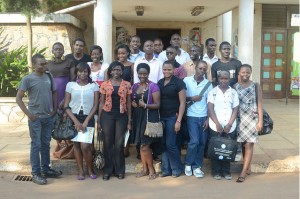
Though the project is still unfolding, we held a writing workshop in January 2013, led by South African writer Zukiswa Wanner and Ugandan writer Beatrice Lamwaka. The longlisted writers were mentored by Nigerian writers Ukamaka Olisakwe Evelyn, Emmanuel Iduma, Richard Ali, Abubakar Adam Ibrahim and Dami Ajayi for close to three months. The longlisted stories are being published online at Short Story Day Africa, Readers Cafe Africa among other places and in the newspapers notably The Observer. An anthology comprising the fourteen stories was published on 21 June 2013.
The writers are touring selected schools in Uganda, they will hold public readings and from 15 – 19, the project year will end with The Writivism Festival in Kampala. As with all ideas, adherents to an unified vision are never in lack. We have since merged with Short Story Day Africa and are open to collaborations and expansion of our program as we begin planning next year’s Writivism festival. We are looking forward to eventually engaging more young people, from South Africa to Nigeria.
Aside from our Writivism project, CACE is building a small community of multilingualism enthusiasts through A Dialogue of Tongues (ADOT) events. A typical ADOT event brings together up to twenty young people who speak different African languages to linguistically teach and learn from one another. The participants are therefore introduced to a new language which they learn over a period of one year with the help of their peers. We also hold Book Talk events on a monthly basis, where we bring together several young people to discuss topical ideas in African authored books. We use these discussions to engage the participants in quality African literature, and more importantly to draw out contemporary themes that could possibly give, albeit subjective, answers to the questions of African modernity, ethics and social and economic growth. Because CACE believes that literary scholarship is a powerful tool for intellectual and social growth, we are running a six-week Freelance Writing Course in Uganda since July 2013 for aspiring writers and journalists.
As an organization, we believe that these small projects will empower African youths to begin to question what their respective national and continental identity means, and what ‘African modernity’ looks like to Africans. Ultimately CACE is built on the belief in a culturally driven world. We want to see a world that has space for all civilizations, a modernity that does not exclude but includes all, and acknowledges the strength and diversity of each person, village, city and country. Through each young person we engage in our projects, through every update on our Facebook page, we believe that we are taking a small but crucial step to build a literate, civically engaged and ultimately a questioning society.
Causing the Extraordinary
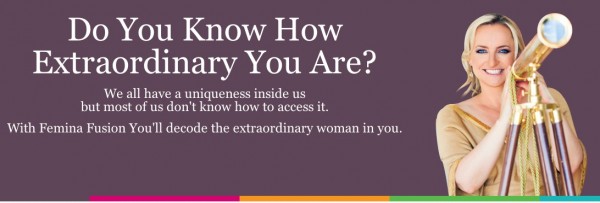
Bea Benkova,
CEO & Founder
The Global Institute for Extraordinary Women
London-Bratislava-Prague-Sao Paulo
“I did not know it was impossible so I simply went and did it” says the powerful Bea Benkova CEO & FOUNDER of Global Institute for Extraordinary Women (GIFEW), who is standing for the transformation of humanity through the aligned power of extraordinary women. (http://www.gifew.org) 
As with most things, it takes one person to see the vision and shine the message to the world. It takes many more to make it a reality. So, now it is not only about me anymore.
Today, as the founder and CEO, Bea is excited to introduce you to the Global Institute for Extraordinary Women (GIFEW) through her in-depth interview of her five year odyssey to develop the organization of her dreams, into a magnificent reality. GIFEW’s promise is that every woman lives a fulfilled life and makes a difference in the world.
What inspired you to start GIFEW? How are you getting support in moving things forward?
It was more of a desire and need to create a platform for women I have been connected with for last 5 years, working with them empowering & collaborating could have a place to be, could have a home. So it was almost a question of what am I going to do with all these women that vibrate with such high power, who are really inspired by the vision of the constellation, they want to make a difference, they want to collaborate. I thought, what am I going to do with all these brilliance, where they can all lead in the world. So it was almost a painful desire, to create GIFEW because everyone was connecting to me and I knew I am the voice of a vision. I sourced it from Rainforest.
GIFEW is about being a global field – a company, an organization, inside which any women who wants to make a difference will integrate, collaborate and create synergies with us and in return we bring it to their lives, their communities and to the world as well as bring harmony with men. All these women will align the power – to exist, to collaborate, to create new synergies to co-create a new collaborative culture.
How are you getting support, are you having enough support to move things forward to take things to different level?
It’s an ongoing process – it’s a journey starting from the centre. I can feel the momentum happening. GIFEW is a global field starting and it’s a multidimensional resonance field. So the more we can tune in to one another, calibrate, and create resonance faster I can see the movement happening and the field growing. We are not into networking, GIFEW is into field working. Each woman inside GIFEW will be working to integrate, to train her, to collaborate, to create synergies, to ignite the fusion process, to become a star, & then collaborate with others. This creates resonance. We are developing synergies to create stars.
Have you presented this idea to different partners such as government agencies or NGOs or women organizations, or universities who are interested in partnering with you now?
GIFEW was launched in December 2012, focused on working w/ women and distinguishing our methodology and program. The first program we have launched is the Global Femina Fusion Foundation Certificate– that is the fundamental. We are distinguishing and Femina Fusion program – it’s about creating partnerships and women are becoming the vortexes creating positive energies. We are in conversation with women partners to create synergies. In GIFEW, women participate and undergo the fusion process- that means they enter the world of collaborative process & synergies.
At this moment, GIFEW has launched 3 programs and we are in the process of collecting stories, and testimonials of the real success. We are currently in the phase of launching partnerships and creating collaborations with women networks, and women, who are becoming vortexes within their field. We in turn take them through the fusion process so that they are ignited. We train these women in our 3 tier program – each tier representing a star, a constellation –an awakening star, a rising star and a shining star.
GIFEW takes women through the spectrum to increase their power – to shine in a very integrative way. We are now in conversations with organizations & partners to collaborate with us to bring our education to their organizations, to increase the level of their integration of the women in mainstream.
In regards to your participation in GIFEW, what have you learned about the challenges and barriers women face in order to shine their light, or break the ceiling or cross the boundaries. How have you learned, or what have you learned about your journey thus far?
I have learned from my experiences, and thro’ working for last five years with women from all parts of the world, all parts of society, different cultures & religions and really getting it clear that all women have the same issues everywhere in the world. These experiences might differ depending upon the culture they are conditioned into & their past. But, generally all women have same issues. That’s why the name Global in our organization and to address that most women don’t consider themselves to be extraordinary.
For me, being extraordinary is not just being talented – we all are born with specific gifts, we are all born with a purpose & a message. Therefore, I believe it’s our responsibility and duty to unlock & discover our gifts for the service of the people and create synergies to find the unique place in the world. That’s the purpose of GIFEW.
Do women get victimized or beaten up by powerful ambitious men who like to control women – would you agree to that?
It depends how these women vibrate in the world. I believe it’s not easy & natural for women to take leadership. There is a lot of male energy or dominations in different cultures, and traditions, and women lose their power & feminity to these energies. And, this is where GIFEW come’s into picture – to create a global playing field for women, where we believe there feminine qualities will be nurtured and harnessed, to shine like a star – it will be a place where they can be totally themselves, and will be called into action to be extraordinary to be of service for themselves, for the community and for the world.
Would you agree that there are some nasty women out there, who use their sex or gender as a trump card to manipulate & abuse men & people’s trust, that impacts how world looks at honest, sincere ambitious women & their participation in the world?
I believe people behave differently – it all depends on the level of consciousness women have, and the values they hold. Of course, if one behaves irresponsibly there is an impact on the community & the listening of that person. But if you focus on what you want to create and bringing forth a new reality, you will notice that your whole field will shift.
There are some women who abuse being a woman, would you agree?
I would say simply, that when women don’t honour who they are they allow themselves to get abused & find amusement in it. The moment they recognize there power – she will stand for herself, not allowing to be made belittle & follow her purpose for life by unlocking their gifts. In my experience it’s all about owning who you are and being of service to the community. It’s all about being vital, happy and joyous.
Does speaking in the listening of others always help a woman?
Not necessary! For me it took five years for people to understand what GIFEW is and its purpose. It has been a step by step process. I have been really listening as to who is resonating with my purpose, who is vibrating at my level, who is aligning with my intentions and would collaborate with me and build the resonance field & synergies.
GIFEW is really about honoring the women how powerful she is, how sacred she is and honoring herself. Femina fusion work is about worshipping the sacredness of being a woman.
Say something about Femina Fusion program – how many women participated, what was there experience?
Here’s the story behind the design of Femina Fusion program – fundamental decision behind our programs was that all GIFEW Certificate programs will be group programs. So someone can’t buy this program and do it on its own.
I believe that the world doesn’t need more successful individuals; it needs more collaborating communities and synergies. All our programs are journeys, they start on Mondays and continue till the participants gets results.
We generally take 150 Diverse Women participants from around the world and we make them go through the experience of the fusion process. These women come from different walks of life, different expertise, and different traditions.
In astronomy, inside the fusion process a star is born – the nebola starts contracting, to the point that it ignites the fusion process. This is exactly what happens inside our Femina Fusion program – we take all the participants through 3 fundamentals of ecologies, you & you, you & others, you and the world at one time, in one place. We take them first for six weeks training – a multimedia coursework. GIFEW has been designed as a virtual coursework, so that any women can take these courses anywhere in the world.
GIFEW is a platform that grounds the vision, opening a field for everyone, women and men, who resonates with the Institute and wants to contribute to the vision creating together the NEW CULTURE of collaboration. It believes that together we can create synergies and as a result, have a larger impact, as one plus one is much more than two. GIFEW is committed to transforming humanity through the aligned power of Extraordinary Women.
They are co-creating a new culture of collaboration where men and women operate harmoniously at an entirely new level. GIFEW believes that the female energy is the access to this new culture. Their transformational educational programs are based on The Authentic & Integrated Women’s Leadership Model that are created based on robust research. Connections and collaborations are powerfully enhanced in their programs.
If this vision resonates with yours we invite you to join our GLOBAL webinars to learn more about GIFEW and our foundation program Femina Fusion Foundation Certificate. http://www.gifew.org/webinar/
What is the price of this program – how do you price it?
We decided at the beginning that we will not go from country to country, but we designed our education in a way that has best system and best technology around the world. We sourced ourselves through the Atlantic Rainforest. GIFEW is based on the Atlantic rainforest geometry, which is the biggest rainforest in the world. The programs are live coaching webinars with me, where I coach individual women and show them how we can start collaborating & create synergies accelerating their purpose with other women participants, lifting the whole group up in a synergistic way.
So the price of the Femina Fusion Foundation Certificate program is 497 euro’s – it is a modern, fast and powerful 6 week multi-media program that you can access from the comfort of your own home, anytime and anywhere. This program provides clarity on your unique path, and determines what your next steps might be. Throughout the sessions, you will understand how to work on yourself and see immediate results in your life through playbooks, through transcripts, through live webinars and thro’ a facebook secret group – where they have the integrated immersing experience out of their participation in this program. The Femina Fusion program is a 3-step journey where you will transform your relationship with yourself, others and the world, and find that fire inside you so you can shine bright.
GIFEW recognize’s that part of power is emphasizing what everyone agrees upon, accept¬ing other views, so you can create a comfort zone of respect and inflict more influ¬ence everywhere you go. Hence, the programs are designed to awaken women and accelerate their personal growth so they may find their unique place in the world. The Femina Fusion Foundation Program, in particular does this in a six week journey to decode the extraordinary Woman inside You.
In the meantime please consider exploring their website www.gifew.org and join our partnership program http://www.gifew.org/partnership-program/
What is the outcome – from each woman that participates in this program? What’s your expectation from these women?
I have seen these women they are excited, they are clear of what their gifts are, they become aware of their vitality, they are ready to create teams, be in charge of their life by being empowered by creating synergies, collaboration and ready to contribute in their families and communities, developing powerful listening in the world, developing their character. This will help them to go to the next level of contribution in the world.
The Global Institute for Extraordinary Women is a space—both virtual and physi¬cal—for women to meet and be empowered. We believe in the importance of con¬nection, which is portrayed as our “Constellation” where such women gather to de¬velop and apply individual insight and experiences.
We would be very happy if you choose to join us to find your unique place contributing to the vision and creating synergies together.
GIFEW’s, unique approach is backed by their own robust research conducted at Harvard Business School. Over 150 of the world’s women leaders were surveyed, with de¬tailed statistical analysis that included a broad cross-section of leadership styles. This research covered organisational development, neuroscience, evolutionary bi¬ology, gender studies and positive psychology.
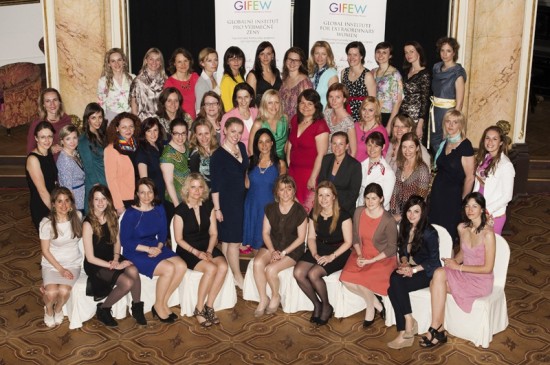
Through this survey GIFEW, analyzed correlations between the factors linked to success, fulfilment and making a difference by the women in the community. The facts gathered from this study have led them to a simple conclusion: Yes, you can. Thus, their Integrated Female Leadership Model was created to help women inte¬grate all aspects of their lives. Instead of merely providing tips on how to succeed in the current world, their model is specially designed to build a new culture where women can thrive and be entitled to a fulfilled life.
Testimonials such as the following have been heard all times, “My CEO can be really critical,” said Liz, a senior consultant, “but that’s the way things work. If I complain, my job is history.”
Risha, a home entrepreneur, is perpetually exhausted: “It’s difficult to care for my¬self,” she admitted, “but someone has to be there for my husband and children.”
They may not sound like anything, but it is a sign of powerlessness and a lack of fulfilment. If we continuously believe in them, such statements can deepen our emotional pits and prevent us from realizing our true potential.
Truth is women who have found their unique place in the world often realize that they don’t know how to expand their ideas and create a significant impact through mobilizing others. Are you in this position today? This is where GIFEW comes into picture to manifest and harness your passion. All you have to do is follow your PASSION with persistence, and use courage to weave a strong web of connections. And this “web” is what we at GIFEW truly en¬courages.
Share about your book. How it impacted you empowering woman, and making a difference in their lives?
Life is Now – 21 Days with Bea Benkova is a book – an interview with Bea, in which the journalist Jaroslava Timkova uncovers not only her private life, but also delves deep inside. It tracks her evolution from childhood, through her successful career as a banker in London, to today’s work as an ambassador and coach of Extraordinary Women. She was brought to this work inspired by unconditional love of her mother. The experience forced her to fully realize that Life is Now!
Bea believes that when we postpone anything significant for another time, it is as though we put aside our entire lives. From the stories of her clients, and from her own experience, Bea Benkova has extracted a series of anecdotes, inspirations and techniques for personal growth and relationship building. The book is written in a welcoming light style, bringing the readers inspiration and guidance on how to live a successful, happy and fulfilled life.
Profile: Bea Benkova, the founder and CEO of GIFEW, worked in international finance sector. Having studied at Oxford and holding degrees in finance and economics from the UK and her native Slovakia, Bea was raised from an early age to be successful and be the best. She held senior positions in the City of London at ABN AMRO and the Royal Bank of Scotland.
Beneath the Lion’s Gaze
This article introduces the dynamic & young women, a first time author Maaza Mengiste hailing from Ethiopia, through an interview. The narrative provides insights on what prompted her to write such a mind boggling novel as well as her views on the current status of women’s empowerment in Ethiopia. The article also provides a brief review of the book which takes you into Ethiopia’s struggle! Maaza, also talks about her new groundbreaking film Girl Rising which she believes will impact the girls and women from Africa. Following is the narrative of the interview:
What compelled you to write this book, did something – a personal experience influence your writing this story
I was born and a child during the early days of revolution in Ethiopia, and growing up, I had bits of memories that I didn’t understand. I was aware that people were frightened, that it was dangerous to go outside at night, and our lives were changing. However, I didn’t understand what was happening. it was that curiosity that led me to read history books about Ethiopia and the revolution that began in 1974. And from that great my desire to write a novel about this period. I found the stories of people’s courage in the face of oppression to be inspiring and something I wanted others to know about.
What in your view point is current growth /development status in Ethiopia
I’m simply a fiction writer, not someone versed in any real way about growth and development. In my very limited perspective, what I could say is that Ethiopia’s economic growth is one of the fastest in Africa. The country is continuing to change rapidly, but the question becomes how wealth and opportunity are distributed. Like many other countries, Ethiopia has a large disparity between rich and poor.
Do you think Women have a bright future in Ethiopia or how is Women’s Empowerment Status in Ethiopia
Ethiopian women are strong and their future in the country is growing brighter. They are fighting for more recognition and more rights, and though there is work to do, there is much promising work being done to improve the situation for girls and women. Education is seen as one of the strongest determinants for a better life and more organizations are working towards ensuring girl’s continue in school and have great opportunities in that arena.
How will Girl Rising documentary make a difference in Africa?
GIRL RISING is a groundbreaking film, directed by Academy Award nominee Richard Robbins, which tells the stories of 9 extraordinary girls from 9 countries, written by 9 celebrated writers and narrated by 9 renowned actresses. Girl Rising showcases the strength of the human spirit and the power of education to change the world.
GIRL RISING will raise awareness of the many issues girls around the world — from Cambodia to Egypt to Peru to Nepal and India and Sierra Leone — face in trying to get their education. The documentary also features girls from Afghanistan and Haiti as well as Ethiopia and each of them are confronted with different obstacles, but each of them are breaking down barriers for themselves. These stories of courage and determination will speak to many, both in Africa and beyond. They will speak to anyone who has had to struggle to fulfil a goal.
Maaza Mengiste’s interview on Beneath the Lion’s Gaze
Igniting a Global Movement To Improve the Health of Girls and Women
Today, fifteen years after I first joined the global health community, I remain an impatient optimist. As Vice President of a global health organization, PSI, and as a Young Global Leader for the World Economic Forum, I have seen what is possible when the global community works together to overcome seemingly impossible development challenges—particularly for girls and women.
Today, more than ever, private capital and creative partnerships among governments, the private and non-profit sectors, and civil society, are needed to test and develop promising health solutions for girls and women that governments and businesses can’t advance on their own.
We are standing on the threshold of a new era of collaboration in philanthropic giving. More women are breaking through gender barriers and achieving unprecedented levels of power and influence, allowing them to ignite change and offer hope to women around the world who are shackled by the effects of poverty.
Companies are forming innovative partnerships with nonprofits and governments in the developing world to address pressing health needs, and we are seeing impressive results. Women are standing toe-to-toe with men as philanthropists—working together to solve some of the world’s most complex problems. The world has seen that progress is impossible without unlocking the potential that exists in every girl. Unlocking that potential will require an inspired effort.
Harnessing Creative Energy for Social Causes
Prior to joining PSI, I was managing director for the international advertising firm Saatchi and Saatchi in Romania. My life revolved around the relentless pursuit of finding new and creative ways to market cigarettes, soda, and other commodities that men, women, and youth “had to have.”
My life changed courses when a remarkable man named Michael Holscher, who worked for PSI, convinced me that I could use the same creative energy to market products and services that have a health benefit and affect social change.
Not long after I met Michael, I joined PSI and spearheaded the development of YouthAIDS, a cause marketing campaign designed to create awareness and raise private capital for high-impact health solutions around HIV and AIDS. The funds raised from this campaign would eventually be invested to develop and deliver one of the most effective HIV prevention tools available.
Unleashing the Power of the Private Investment in Health
In 2007 the World Health Organization and UNAIDS recognized voluntary medical male circumcision as an effective tool to reduce the risk of HIV infection among men. Randomized control trials confirmed that circumcised men are 60 percent less likely to acquire HIV from their female partner.
This exciting development clashed with an onslaught of skepticism by many global health experts who believed it would be impossible to convince men to undergo this simple procedure. Even if demand for the service could be created, many believed it would be impractical and too costly to make it widely available, particularly across sub-Saharan Africa where the HIV epidemic maintains a stronghold.
The health experts at PSI were more optimistic. With philanthropic contributions of $500,000 we launched a circumcision program in Zambia and later expanded the program in neighboring countries. We were able to prove, through communications campaigns, that we could create demand for circumcision among young males.
The program also demonstrated that the service could be offered safely and cost effectively. Armed with proof, that initial investment has since leveraged more than $77 million from donors, including the Bill and Melinda Gates Foundation, the United States Agency for International Development, and the UK Department for International Development, to expand the program in other countries.
Between 2007 and 2012, PSI was able to provide circumcision services to more than 400,000 men in 7 countries – Kenya, Lesotho, Mozambique, South Africa, Swaziland, Zambia and Zimbabwe.
Using the World Bank-approved DALY metric, PSI’s circumcision interventions added 503,521 years of healthy life. Combined with efforts from other health organizations, local governments and with support from international donors, more than 1.1 million African men have been circumcised —moving us even closer to an AIDS-free generation.
An Opportunity for Girls and Women
If we can apply this leverage model to deliver health solutions for the 600 million girls and women across the developing world, we will change the course of humanity. The effects of poor health prevent young girls and women from going to school, joining the workforce, and earning equal status with men—it prevents them from reaching their full potential. Today, 75 percent of HIV infections among 15- to 24-year-olds in sub-Saharan Africa are young women, and up to one-half of girls in developing countries become mothers before the age of 18, largely due to lack of access to modern family planning options. The burden of preventable disease and health complications is undeniable, and it impacts all aspects of a girl’s life, as well as her family, and her community.
So, why invest in girls and women?
It’s simple. Girls and women deliver for their families, communities and nations when they are healthy, educated and empowered to reach their full potential. It’s time we deliver for them.
To read more please read the enclosed link…
Igniting a Global Movement to Improve the Health of Girls and Women
Download FREE Exclusive Gift: Ebook version of my first book “My Dreams Are Not For Sale”

In “My Dreams Are Not For Sale” author Swati Save shares her profound experiences in order to achieve her goals in life! This eye-opening, non-fiction, motivational book, guides the reader to understand the virtues behind living the life to its fullest. The book discusses different facets of life vis-a-vis the author’s insights on breakthroughs, breakdowns, love, making the right choices, and commitment!
“My Dreams Are Not For Sale” empowers and inspires you, as it takes you through the journey of life’s miracles that are waiting for you to claim them! A profoundly honest, and captivating work, this book is a literary beacon of hope!
Download .pdf versionDownload .mobi version for Kindle
(Note: .mobi version is downloadable as a zip file, also includes the pdf.)
Share Don’t forget to give me feedback and share with your friends.
Youth Employment in Ghana
by Adam Mahama
National Coordinator, Youth in Agriculture Progamme, Ghana
The Youth in Agriculture Programme (YIAP) concept was first conceived by the late President of Ghana, Professor Evans John Atta Mills in 1999, when he was the Chairman of the Economic Management team from 1996 to 2000. This was one of the interventions the National Democratic Congress Government introduced as its solution to the precarious youth unemployment in the country.
The Youth in Agriculture Programme (YIAP) in Ghana is a Government of Ghana (GOG) agricultural sector initiative with an objective of motivating the youth to accept and appreciate farming as a commercial venture, thereby taking up farming as a life time vocation.
The Youth in Agriculture Programme (YIAP) has been in existence since 1999, received more emphasis and attention since 2009. From a 47,000 youth who gained employment in 2009 under the programme, by 2011 the figure rose to 81,000. In 2012 the number of youth employed reduced to 45,000 because some of them were weaned off and others dropped because they have consistently failed to repay back credit given to them.
Read the article (.pdf)